RESEARCH LEADERSHIP
Hanna’s recent interests have led her to become Principal Investigator on two interdisciplinary, collaborative research project, Performance: Conservation, Materiality Knowledge and Activating Fluxus. Both have been funded by the Swiss National Science Foundation’s four-year research grant.
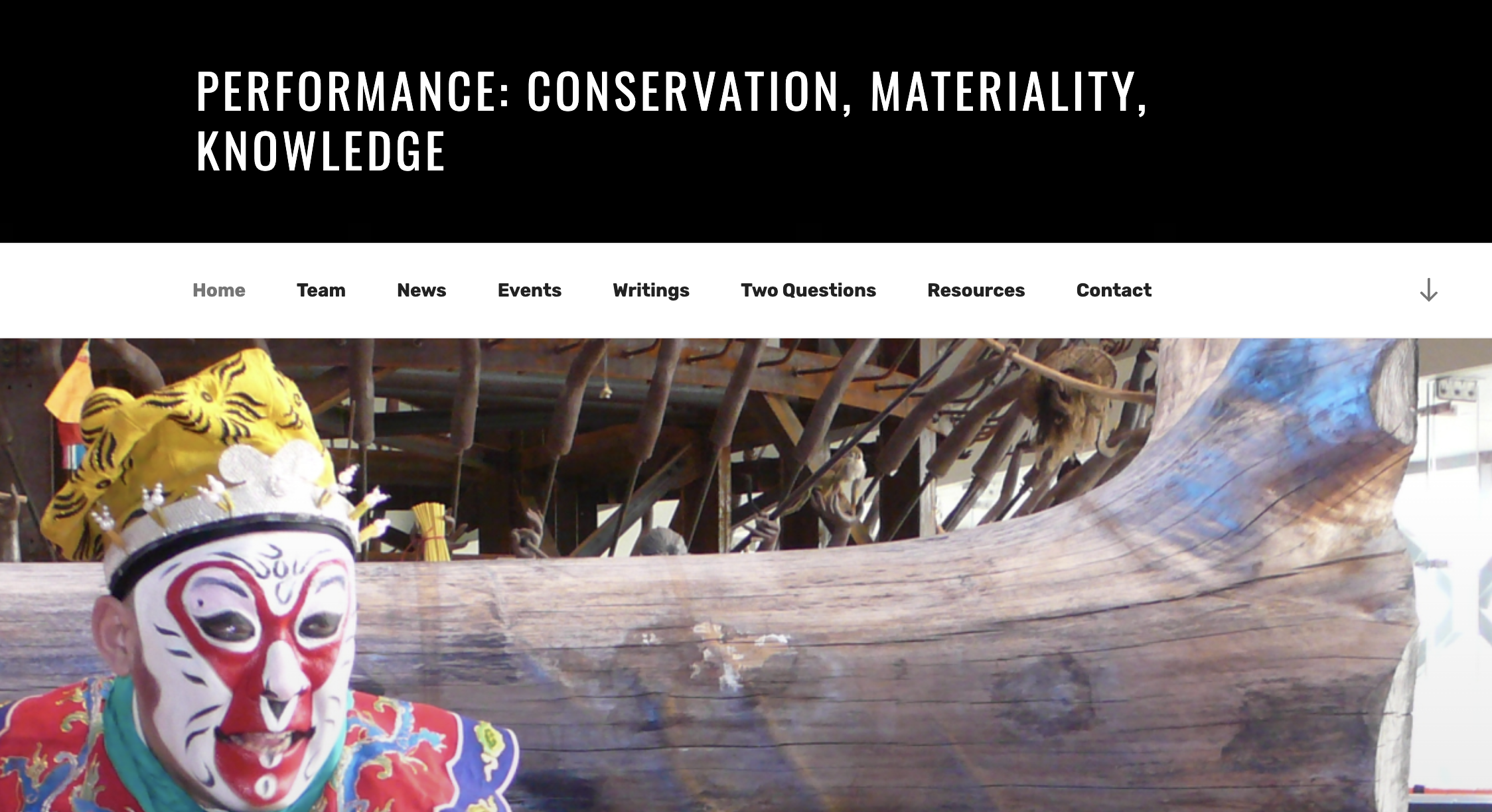
Performance: Conservation, Materiality, Knowledge is an ongoing research project that commenced at the Institute of Materiality in Art and Culture, Bern University of the Arts (HKB), in October 2020. The project focuses on the questions of conservation of performance-based works, their temporal specifics, the involvement of the human and non-human body, and the world of their extended trace history, memory, and archive. Explored are notions of care, the ideals of traditional conservation and their relation to tacit or explicit knowledge, skill and technique. Taking as a starting point the necessity for conservators to access and deepen this area of study, and unlike queries that situate these questions within other disciplines, in this project, we approach performance as a necessarily conservable form. The project involves Hanna Hölling, Jules Pelta Feldman, Emilie Magnin, Joanna Lesnierowska, Valerian Maly, Electra D’Emilio and Charles Wrapner – an interdisciplinary team of conservators, art historians, artists, choreographers and scientists that share interests in performance conservation. The project’s website offers a glimpse of our writings, Two Questions interview series, research seminars, colloquiums and resources.
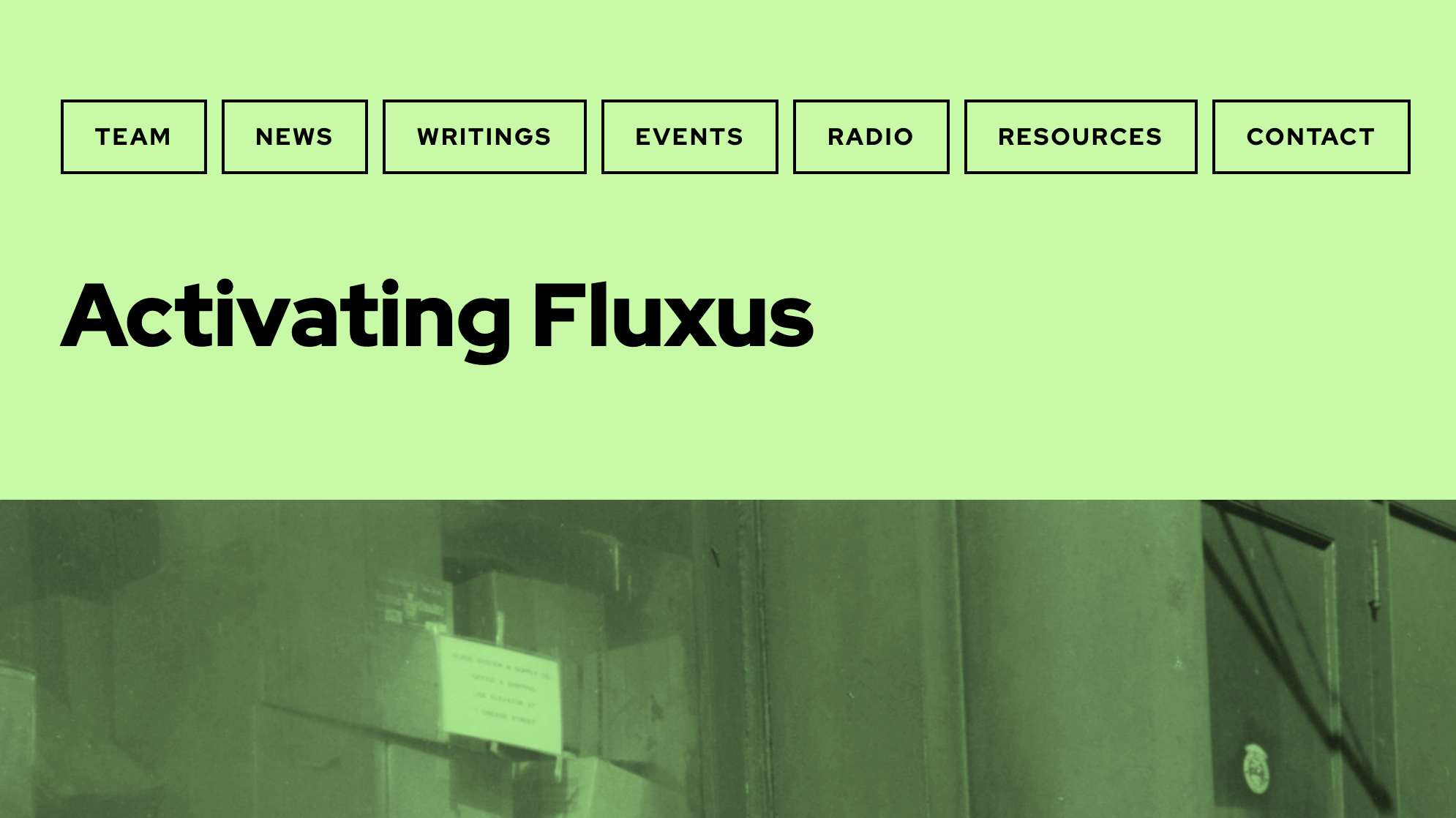
Activating Fluxus is a research project that started in April 2022 at the Institute of Materiality in Art and Culture, Bern University of the Arts (HKB). The project consists of an interdisciplinary team of researchers, including Prof. Dr. Hanna B Hölling (project lead), Dr. Aga Wielocha (postdoctoral fellow), Josephine Ellis (doctoral candidate), Marcus Gossolt (artistic collaborator), and a network of associated researchers: Johannes M. Hedinger, Sally Kawamura, Elke Gruhn, Stefanie Mathey and Émilie Parendeau. Together they are investigating the transitory international lives and afterlives of Fluxus objects, events, and ephemera created from the 1960s – 1970s, not destined for preservation. For the project’s activities, interim results, research seminars and the podcast Radio Fluxus, follow this link.
RESEARCH SUMMARY
Hanna works on the intersection of art history and theory, material culture studies, and conservation. Her primary research and teaching interests lie, among others, in ethics, aesthetics, and philosophy in and of conservation, contemporary and post-war art, technology-based media, and the concepts of time, change, identity, and archive (as discourse and physical space) both in artworks and in objects of material culture. In conservation, she focuses on the epistemic dimensions of conservation, that is, knowledge derived from, and generated by, diverse practices, theories, and cultures of conservation.
Art and materiality since the 1960s
Hanna obtained her PhD the University of Amsterdam in 2013 with a thesis considering aspects of change, materiality, and temporality in the conservation of multimedia installations. Revised and titled Paik’s Virtual Archive: Time, Change and Materiality in Media Art, the book was published from The University of California Press in 2017. Paik’s Virtual Archive reconsiders the role of conservation in our understanding of what the artwork is and how it functions within and beyond a specific historical moment. In her discussion of works by Nam June Paik (1932–2006), the Korean American artist who is considered the progenitor of video art, she explores the relation between the artworks’ concept and material, theories of musical performance and performativity, and the Bergsonian concept of duration, as well as the parts these elements play in the conceptualization of multimedia artworks. Hanna combines her assessment of artistic technologies with ideas from art theory, philosophy, and aesthetics to probe questions related to materials and materiality, not just in Paik’s work but in contemporary art in general. Ultimately, she proposes that the archive—the physical and virtual realm that encompasses all that is known about an artwork—is the foundation for the identity and continuity of every work of art. Paik’s Virtual Archive has been reviewed in Kunstchronik (Anna Schäffler, 2020), Visual Studies (Daniel Kayes, 2019), Journal for the American Institute for Conservation (Jonathan Kemp, 2019), Art Bulletin (Gregory Zinman, June 2018); caa.reviews (Andrea Gyorody, June 2018); and Critique d’art (Olivier Lussac, November 2018). In 2018 it was nominated for an Infinity Award by the International Center for Photography (ICP), New York City.
One work
Revisions: Zen for Film is a project realized at the Bard Graduate Center in New York, where Hanna held a Visiting Professorship supported by the Andrew W. Mellon Foundation (2013-15). Revisions was a combination of a research project, publication, exhibition and pedagogy. Its intellectual aspiration was, among other things, to find answers to the questions how artworks endure over time despite their material and conceptual alterations, and how first-hand awareness of materiality enhances visual knowledge. The macrocosm of an interdisciplinary endeavour combining the analytic framework of conservation with art theory, aesthetics, performance studies, and theories of authorship and authenticity were employed to look at the microcosm of a single work, Zen for Film by Nam June Paik. A result of this project was an exhibition titled Revisions—Zen for Film (17 September 2015—21 February 2016). An eponymously titled digital interactive kiosk co-created by postgraduate students was displayed at the gallery and made available online. A series of academic and public events followed. A fully illustrated book showcasing the outcomes of Hanna’s research was published by the Bard Graduate Center in 2015. The book’s intellectual aim was to examine how artworks endure over time and how decay, technological obsolescence and remediation affect what the artwork is and what it may become, and how observing change in artworks might teach us something about their nature and behaviour. The book also queried how changeable artworks induce a rethinking of those museological paradigms that assume fixity and stasis. Revisions was reviewed in Artforum (Jeffrey Weiss, March 2016); Critical Inquiry (Hannah Higgins, May 2016); Journal for Curatorial Studies (Judit Bodor, June 2016); Art Libraries of Society of North America Review (Lindsey Reno, May 2016); Journal of the German Conservation Association (Martin Koerber, May 2017); and The Art Blog (Andrea Kirsch, March 2017).
Curatorial and conservation cultures
Hanna’s interest in the materiality of artworks and objects of material culture materialized in two edited volumes, The Explicit Material: Inquiries on the Intersection of Curatorial and Conservation Cultures, co-edited with Francesca Bewer and Katharina Ammann (Leiden and Boston: Brill, 2019) and the forthcoming Object—Event—Performance: Art, Materiality and Continuity since the 1960s (New York and Chicago: Bard Graduate Center and The University of Chicago Press).
The Explicit Material gathers varied perspectives from the discourses of conservation, curation and humanities disciplines to focus on aspects of heritage transmission and material transitions. The authors observe and explicate the myriad transformations that works of different kinds – manuscripts, archaeological artefacts, video art, installations, performances, film, and built heritage – may undergo: changing contexts, changing matter, changing interpretations and display. Focusing on the vibrant materiality of artworks and artefacts, The Explicit Material puts an emphasis on objects as complex constructs of material relations. By so doing, it announces a shift in sensibilities and understandings of the significance of objects and the materials they are made of, and on the increasingly blurred boundaries between the practices of conservation and curation.
Much of the artwork that rose to prominence in the second half of the twentieth century took on novel forms—such as installation, performance, event, video, film, earthwork, and intermedia works with interactive and networked components—that pose a new set of questions about what art actually is, both physically and conceptually. For conservators, this raises an existential challenge when considering what elements of these artworks can and should be preserved. Object—Event—Performance revisits the traditional notions of conservation and museum collecting that developed over the centuries to suit a conception of art as static, fixed, and permanent objects. Conservators and museums increasingly struggle with issues of conservation for works created from the mid-twentieth to the twenty-first century that are unstable over time. A welcome resource on contemporary conservation for art historians, scholars of dance and theatre studies, curators, and conservators, the book asks what it means to conserve artworks that fundamentally address and embody the notion of change and, through this questioning, guide us to re-evaluate the meaning of art, of objects, and of materiality itself.
Hanna’s current research concerns the afterlives of Fluxus events, objects and ephemera and the ontology, aesthetics and materiality of performance. She is also interested in the critical questions considering the materiality of landscape and land and environmental art, including its ecological and political implications. Aspects of this research materialized in an anthology Landscape 1: Institute for Land and Environmental Art (Vexer 2020)-